Quick Login (Optional)
Login is completely optional. Your cart will be saved automatically for this browser session.
Continue as Guest
No account needed! Your cart is automatically saved for this browser session.
Create new account
Create your account to be part of the BitcoinButik world, discover our new collections and receive news from the Maison.
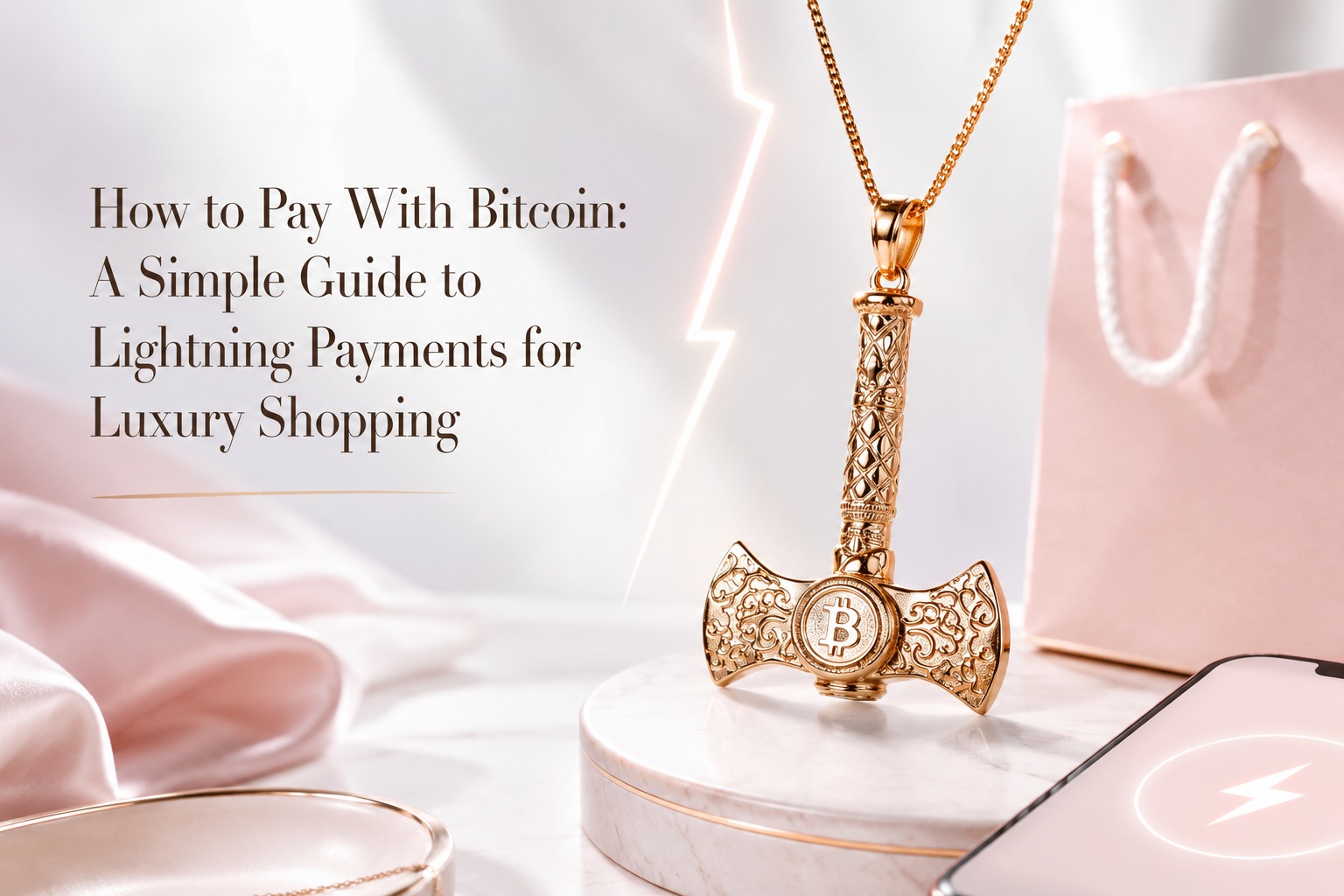
How to Use Bitcoin for Luxury Shopping With Lightning Payments
Paying with Bitcoin has become much easier with the Lightning Network. Instead of waiting for an on-chain Bitcoin confirmation, Lightning allows supported payments to settle in seconds, often with very low fees. For online shoppers, including luxury buyers, this creates a faster and more convenient way to use BTC at checkout. For anyone wondering how to pay with bitcoin in real-world scenarios, especially in high-end retail, Lightning payments are the missing piece that makes it all work seamlessly.
Luxury shopping has always been about experience: speed, exclusivity, and convenience. Traditionally, Bitcoin transactions struggled to meet these expectations due to slower confirmation times and variable fees. Today, Lightning payments are changing that narrative entirely.
Understanding Lightning Payments
Lightning allows participants to make multiple payments through a network of payment channels without recording every individual payment on Bitcoin's blockchain. This reduces the need to wait for an on-chain confirmation for each payment and allows smaller transactions to be processed through the Lightning Network.
What This Means in Practice:
- Transactions can be completed in seconds rather than waiting for on-chain confirmation.
- Fees are generally very low, although they can vary depending on the payment route and wallet or service involved.
- Higher payment capacity: Lightning is designed to enable a much larger volume of smaller, faster payments without putting every transaction directly on Bitcoin's base layer.
This innovation allows Bitcoin to function like a modern payment system without sacrificing its decentralized nature.
Read more: How to Buy Bitcoin in the USA
Why Traditional Bitcoin Payments Weren’t Ideal for Shopping
Before Lightning, using Bitcoin for purchases—especially luxury goods—came with limitations:
- Slow confirmations: Bitcoin payments can require waiting for blockchain confirmations, with the practical waiting time depending on network conditions, transaction fees, and the number of confirmations a merchant requires.
- Higher fees during congestion: Costs could increase when demand for Bitcoin block space was high.
- Poor checkout experience: Waiting for confirmations was not ideal for instant purchases.
- Limited retail adoption: Merchants were often hesitant to accept Bitcoin because of payment-processing and usability challenges.
Lightning addresses many of these challenges by enabling fast, low-cost payments without requiring each payment to be confirmed individually on Bitcoin's base layer.
How to Pay With Bitcoin Using Lightning
If you're new to crypto payments, learning how to pay with Bitcoin online using Lightning is straightforward.
Step-by-Step Guide
1. Set Up a Lightning Wallet
Choose a wallet that supports Lightning functionality. These wallets are designed for speed and ease of use.
2. Fund Your Wallet
Transfer Bitcoin into your wallet. Some wallets automatically convert on-chain BTC into a Lightning-ready balance.
3. Choose Bitcoin at Checkout
When shopping online, select the option to pay with bitcoin.
4. Scan the Invoice
A Lightning invoice is a payment request generated by the merchant. It contains the information your wallet needs to send the correct amount of BTC to the recipient.**** A QR code or payment request will appear. Scan it using your wallet.
5. Confirm Payment Instantly
Approve the transaction, and the payment is completed within seconds.
This frictionless process is what makes Lightning ideal for retail—especially luxury e-commerce.
Lightning Payments and the Luxury Shopping Experience
Luxury shopping is about more than the product itself. Customers often value a smooth purchasing process, international accessibility, discretion, and the ability to choose how they pay. For Bitcoin holders, Lightning can add another payment option that fits naturally into an increasingly digital shopping experience.
1. A Smoother Checkout Experience
For supported payments, Lightning can reduce the need to wait for an on-chain Bitcoin confirmation before a transaction is processed. This can make BTC more practical for online purchases where customers expect a straightforward checkout.
2. International Accessibility
Bitcoin can provide an alternative way to make cross-border payments without relying entirely on traditional banking infrastructure. However, availability, merchant support, currency conversion, and regulations can vary by country.
3. Payment Flexibility
Luxury customers have different preferences when it comes to payment. Supporting Bitcoin gives eligible shoppers another way to complete a purchase using digital assets they already own.
4. Privacy Considerations
Luxury purchases can sometimes involve a preference for discretion. Lightning has different privacy characteristics from ordinary on-chain Bitcoin transactions and may provide greater transactional privacy in some circumstances. However, Lightning payments should not be considered completely anonymous or private.
Read more: How to Buy Bitcoin Jewelry With Bitcoin?
Lightning vs Traditional Bitcoin Payments
Bitcoin payments can be made directly on the Bitcoin blockchain or through the Lightning Network. Both use Bitcoin, but they are designed for different payment experiences. On-chain transactions are recorded directly on the Bitcoin blockchain, while Lightning enables supported payments through a separate layer built on top of Bitcoin.
What This Comparison Shows
For retail payments, Lightning can make Bitcoin more practical by reducing the need to wait for an on-chain confirmation for every individual payment. It is designed for quick, smaller transactions, while on-chain Bitcoin remains important for transactions that need to be settled directly on the Bitcoin blockchain.
| Feature | On-Chain Bitcoin | Lightning |
|---|---|---|
| Settlement | Recorded on the Bitcoin blockchain | Processed through the Lightning Network |
| Speed | May require waiting for blockchain confirmation | Designed for rapid payment settlement |
| Fees | Can vary depending on network demand | Generally low, but can vary by payment route and wallet |
| Best suited for | Direct blockchain settlement and larger transfers | Smaller, frequent, and retail payments |
| Checkout experience | May involve waiting for confirmation | Designed for a quicker checkout experience |
For luxury e-commerce, this difference can be important. A customer purchasing jewelry with Bitcoin may prefer a payment method that does not require waiting for an on-chain confirmation before the order can be processed. Where Lightning is supported, it provides an additional way to make Bitcoin payments more practical for online shopping.
The Growing Role of Crypto Payments in Luxury Retail
Some luxury brands and specialized retailers have begun exploring or supporting crypto payments as digital assets become more relevant to certain consumers.
Key Trends:
- Crypto-native consumers want to spend their digital assets
- Younger buyers prefer decentralized financial tools
- Global demand for luxury goods continues to rise
- Alternative investments are blending with lifestyle purchases
Bitcoin is no longer just held—it’s being used.
Why Bitcoin and Luxury Jewelry Are a Natural Fit
Bitcoin and luxury jewelry may seem like very different forms of value, but they share several characteristics that make them a natural fit. Both can appeal to buyers who value scarcity, ownership, and assets that carry meaning beyond everyday consumption. For Bitcoin holders, using BTC to purchase fine jewelry can also create a direct connection between digital wealth and a tangible physical asset.
1. High-Value Purchases
Luxury jewelry can represent a significant purchase, making payment flexibility particularly relevant to some buyers. Customers who hold Bitcoin may prefer to use their existing digital assets rather than first converting them into traditional currency and then completing a purchase through conventional payment methods.
For merchants that support Bitcoin payments, this creates another payment option for customers purchasing higher-value jewelry and collectibles.
2. International Customers
Luxury jewelry often attracts customers from different countries, while traditional international payments can involve banks, payment processors, currency conversion, and other financial infrastructure. Bitcoin can provide an alternative way for eligible customers to make cross-border payments, although availability, regulations, and merchant support vary by country.
Lightning can make supported Bitcoin payments more practical for online commerce by providing a payment layer designed for faster transactions.
3. Turning Digital Wealth Into Tangible Assets
One of the most interesting connections between Bitcoin and luxury jewelry is the transition from digital wealth to physical ownership.
Bitcoin exists digitally, while jewelry is a tangible asset that can be worn, collected, gifted, or passed down. For someone who has accumulated Bitcoin, purchasing a piece of fine jewelry can represent a different way of using that wealth.
Instead of viewing Bitcoin only as an asset to hold, some buyers may see it as a way to acquire meaningful physical goods.
4. Scarcity and Collectibility
Scarcity is another important connection.
Bitcoin has a fixed maximum supply, while luxury jewelry can derive value from factors such as limited production, rare materials, craftsmanship, design, and exclusivity. Limited-edition jewelry can therefore appeal to collectors for reasons that extend beyond its immediate practical use.
This creates an interesting relationship between digital scarcity and tangible scarcity.
A Bitcoin holder purchasing a limited-edition piece of jewelry is, in a sense, bringing together two different forms of scarce value: a digitally scarce asset and a physically scarce collectible.
5. Ownership Beyond the Transaction
Luxury purchases are often about more than completing a transaction. Jewelry can become part of a person's identity, a gift for someone important, a collector's piece, or an item that remains valuable through generations.
This gives Bitcoin payments in luxury retail a different meaning from simply using cryptocurrency at checkout. The transaction connects a digital asset with something physical, personal, and potentially lasting.
For Bitcoin-focused luxury retailers such as Bitcoin Butik, this intersection creates a distinctive proposition: customers can use Bitcoin to acquire tangible jewelry while bringing together two worlds built around scarcity, value, and ownership.
Read more: Where to Buy Bitcoin Online?
Buying Luxury Jewelry With Bitcoin
For some Bitcoin holders, spending BTC is about more than making a payment. It can be a way to turn digital wealth into something tangible. Luxury jewelry is a natural fit because it is not only something you can own and wear, but it can also carry personal meaning, craftsmanship, and lasting value.
This is where Bitcoin Butik fits into the conversation. The brand brings together two worlds that are becoming increasingly connected: Bitcoin and luxury jewelry. Instead of treating Bitcoin only as an asset to hold, customers can use it to purchase a physical piece of jewelry that they can keep, wear, collect, or give as a gift.
1. Turning Digital Wealth Into Something Tangible
Bitcoin is digital by nature. Jewelry is the opposite—it is physical, personal, and made to be experienced.
For someone who has accumulated Bitcoin, using part of their BTC to purchase jewelry can be a different way of enjoying the value they have built. The result is not simply another digital transaction. It is an actual piece that can become part of a collection, a personal style, or a meaningful gift.
2. Why Bitcoin Holders May Be Drawn to Luxury Jewelry
Bitcoin-focused buyers often have an interest in products that reflect their values and connection to the Bitcoin ecosystem. Luxury jewelry can provide that connection in a physical form.
It may appeal to:
- Bitcoin holders who want to use BTC for real-world purchases
- Collectors looking for distinctive jewelry
- Buyers who appreciate limited or exclusive designs
- People interested in the relationship between digital and physical assets
- Customers looking for a meaningful way to turn digital wealth into something tangible
3. Where Bitcoin Payments Meet Luxury
The payment experience is also part of this shift. When a retailer supports Bitcoin payments, customers can use BTC directly rather than relying solely on traditional payment methods.
For supported Lightning payments, the process can be particularly convenient because Lightning is designed for fast, smaller Bitcoin payments without recording each individual payment directly on Bitcoin's base layer.
For an online luxury purchase, that creates a payment experience that fits naturally with the digital nature of Bitcoin while the product itself remains completely physical.
4. The Connection Between Two Forms of Scarcity
There is another reason Bitcoin and luxury jewelry make an interesting combination: scarcity.
Bitcoin has a predetermined maximum supply. Jewelry can also be scarce, whether because of limited production, rare materials, craftsmanship, or a particular design.
When someone uses Bitcoin to purchase a distinctive or limited piece of jewelry, two different forms of scarcity come together—digital scarcity and physical scarcity.
That is part of what makes the idea more interesting than simply using another payment method. A digitally scarce asset is being exchanged for something tangible that may also be limited or collectible.
5. A New Relationship Between Digital Wealth and Luxury
Bitcoin's role is gradually expanding beyond simply being something people buy and hold. For some users, it is also becoming a way to pay for products and experiences that matter to them.
Bitcoin Butik sits within this intersection of Bitcoin, luxury jewelry, digital wealth, and physical ownership. For customers who want to use their BTC to acquire something tangible, luxury jewelry offers a way to connect the digital asset they own with something they can actually wear, collect, or pass on.
Conclusion
Learning how to pay with Bitcoin is becoming easier as payment technologies such as the Lightning Network make BTC more practical for online purchases. While traditional on-chain Bitcoin transactions remain an important part of the network, Lightning provides another option for supported payments where a quicker checkout experience is important.
For luxury shopping, the appeal goes beyond payment convenience. Bitcoin gives holders a way to use digital wealth to purchase tangible items, while luxury Bitcoin jewelry brings together craftsmanship, ownership, exclusivity, and scarcity. This creates an interesting connection between two different forms of value: digital scarcity and physical scarcity.
As more merchants explore crypto payments, Bitcoin may become a more familiar part of online commerce. For Bitcoin-focused luxury retailers such as Bitcoin Butik, this creates an opportunity to connect the world of digital assets with fine jewelry and give customers another way to turn BTC into something tangible, personal, and lasting.
Frequently Asked Questions
1. How do I pay with Bitcoin online?
To pay with Bitcoin online, choose a merchant that accepts BTC, select Bitcoin at checkout, and follow the payment instructions provided. If the merchant supports Lightning, you can use a Lightning-compatible wallet to scan the payment invoice and approve the transaction.
2. What are Lightning payments?
Lightning payments are Bitcoin transactions made through the Lightning Network, a second-layer payment network built on Bitcoin. It is designed to enable faster payments without recording every individual transaction directly on Bitcoin's base layer.
3. Are Lightning payments faster than regular Bitcoin transactions?
Yes. Lightning is designed for rapid payment settlement, so supported payments can generally be completed much faster than waiting for an on-chain Bitcoin confirmation.
4. Do I need a Lightning wallet to make a Lightning payment?
Yes. If a merchant provides a Lightning invoice, you generally need a Bitcoin wallet that supports Lightning payments to complete the transaction.
5. Can I buy luxury jewelry with Bitcoin?
Yes, some luxury jewelry retailers accept Bitcoin as a payment method. Bitcoin Butik is an example of a luxury jewelry brand serving customers interested in combining Bitcoin with physical jewelry ownership.
6. Are Bitcoin payments safe for online shopping?
Bitcoin payments use cryptographic technology and the Bitcoin network's security infrastructure. However, customers should still verify the merchant, payment details, wallet address or Lightning invoice, and the amount before approving a transaction.
7. Are Lightning payments private?
Lightning payments have different privacy characteristics from ordinary on-chain Bitcoin transactions and can provide greater transactional privacy in some circumstances. However, Lightning should not be considered completely anonymous or private.
8. Are there fees when paying with Bitcoin?
Bitcoin payment fees depend on the payment method and network conditions. Lightning payments are generally designed to have low fees, although the exact cost can vary depending on the payment route, wallet, and service involved.
9. Can I use Bitcoin to make international purchases?
Bitcoin can make cross-border payments more accessible because it does not rely on the same traditional banking infrastructure. However, merchant availability, local regulations, exchange requirements, and other restrictions can vary by country.
10. Why are Bitcoin and luxury jewelry a natural fit?
Bitcoin and luxury jewelry both have strong connections to scarcity, value, and ownership. Using Bitcoin to purchase jewelry can allow holders to turn part of their digital wealth into a tangible item that can be worn, collected, gifted, or kept for the long term.